In today’s digital age, skincare advice is just a scroll away. Social media platforms are filled with influencers sharing tips, routines, and product recommendations. While some content is helpful, a large portion is based on skincare influencer myths that can mislead viewers. The rise of social media trends has made it easier for unverified information to spread quickly, leading to widespread beauty misinformation. Many people follow these trends without understanding their skin type or scientific validity, resulting in ineffective or even harmful routines. It is important to separate facts from myths to maintain healthy skin and avoid unnecessary damage.
What Are Skincare Influencer Myths?
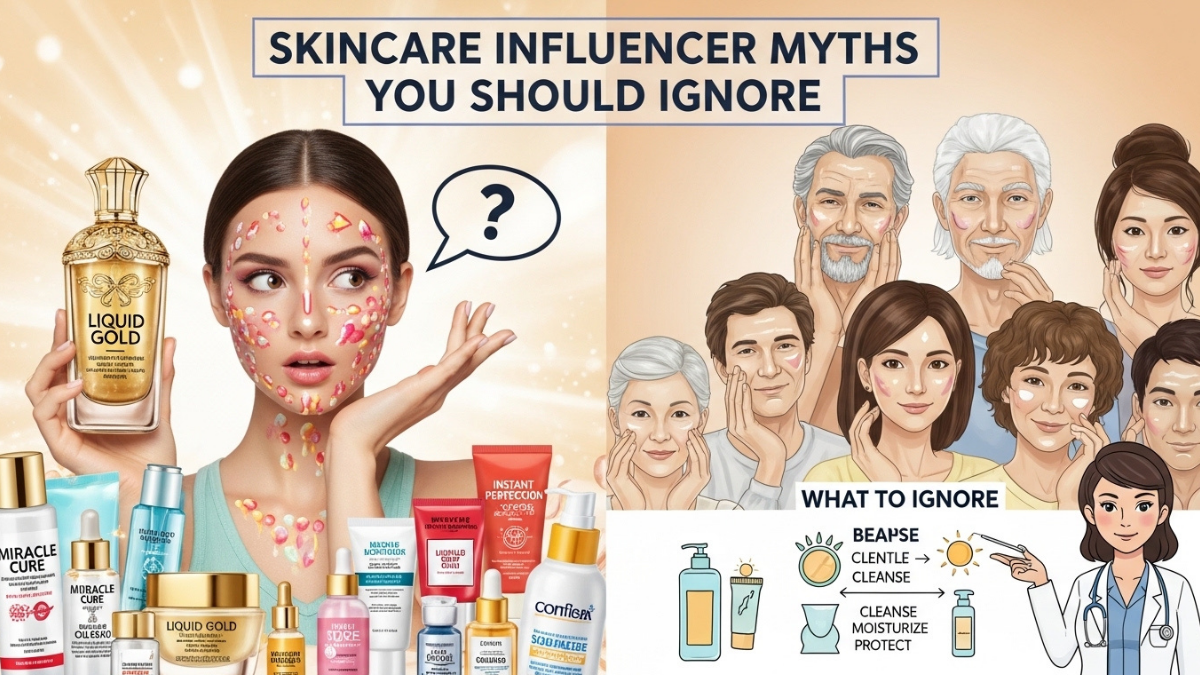
Skincare influencer myths refer to misleading or incorrect information shared by influencers, often without proper scientific backing. These myths are usually presented as quick solutions or “secret hacks,” making them appealing to a wide audience. However, they often contribute to beauty misinformation and unrealistic expectations.
Common myths include:
- “Natural ingredients are always safe”
- “More products mean better results”
- “DIY skincare is always effective”
- “Expensive products guarantee better skin”
- “You need a 10-step routine for glowing skin”
These ideas spread rapidly through social media trends, making it difficult for users to identify accurate information.
Why Beauty Misinformation Spreads So Fast
The rapid spread of skincare influencer myths is largely due to the nature of social media. Platforms are designed to promote engaging content, not necessarily accurate information. This leads to the viral spread of beauty misinformation, especially when content is visually appealing or easy to follow.
Key reasons include:
- Influencers prioritizing engagement over accuracy
- Lack of professional qualifications among content creators
- Viral challenges and trending skincare hacks
- Audience trust in influencer recommendations
- Algorithm-driven promotion of popular content
These factors amplify social media trends and make skincare influencer myths more widespread than ever.
Common Skincare Myths vs Reality
Understanding the difference between myths and facts is essential to avoid falling for skincare influencer myths. Many popular beliefs are not supported by dermatological science and can lead to poor skincare choices.
Here is a table comparing myths and reality:
| Myth | Reality |
|---|---|
| Natural products are always safe | Some natural ingredients can irritate skin |
| More products give better results | Overuse can cause skin damage |
| Expensive means effective | Ingredients matter more than price |
| DIY remedies are always safe | Incorrect use can harm skin |
| Daily exfoliation is necessary | Over-exfoliation leads to damage |
This table highlights how beauty misinformation can lead to harmful practices when influenced by social media trends.
Impact of Following Skincare Myths
Following skincare influencer myths can have serious consequences for skin health. Many people adopt routines without understanding their skin type, leading to irritation, breakouts, and long-term damage. The influence of beauty misinformation often results in unrealistic expectations and frustration.
Some common effects include:
- Skin irritation and sensitivity
- Worsening of acne or other conditions
- Damage to the skin barrier
- Wasted money on ineffective products
- Confusion due to conflicting advice
These outcomes show how blindly following social media trends can negatively affect skincare routines.
How to Identify Reliable Skincare Advice
To avoid falling for skincare influencer myths, it is important to evaluate the credibility of the information you consume. Not all influencers provide accurate advice, and distinguishing facts from beauty misinformation is essential.
Here are some tips:
- Check if the source has professional expertise
- Look for scientifically backed information
- Avoid blindly following viral social media trends
- Understand your skin type before trying products
- Consult dermatologists for serious concerns
By following these steps, you can protect yourself from misleading information and make better skincare decisions.
Building a Simple and Effective Skincare Routine
Instead of following skincare influencer myths, it is better to focus on a simple and effective routine tailored to your needs. Overcomplicating skincare due to social media trends often leads to more harm than good.
A basic routine includes:
- Cleansing to remove dirt and oil
- Moisturizing to maintain hydration
- Sunscreen to protect against UV damage
- Targeted treatments for specific concerns
This approach helps avoid beauty misinformation and ensures healthier skin without unnecessary complexity.
The Role of Awareness in Skincare
Awareness is the key to avoiding skincare influencer myths. With the increasing influence of social media trends, users must become more critical of the content they consume. Understanding the basics of skincare and recognizing beauty misinformation can help individuals make informed decisions.
Being aware means:
- Questioning unrealistic claims
- Avoiding one-size-fits-all solutions
- Prioritizing skin health over trends
- Learning from reliable sources
This mindset helps reduce the impact of skincare influencer myths and promotes better skincare practices.
Conclusion
The rise of skincare influencer myths highlights the challenges of navigating skincare advice in the digital age. While social media trends make information easily accessible, they also contribute to widespread beauty misinformation. Following unverified advice can lead to skin damage and unnecessary expenses. By focusing on science-backed information and understanding your skin’s needs, you can build a routine that truly works. Ultimately, healthy skin is not about following trends but about making informed and consistent choices.
FAQs
What are skincare influencer myths?
Skincare influencer myths are misleading skincare tips shared by influencers without proper scientific evidence.
Why is beauty misinformation common on social media?
Beauty misinformation spreads quickly due to viral social media trends and lack of verified information.
Can following skincare myths harm your skin?
Yes, skincare influencer myths can lead to irritation, breakouts, and long-term skin damage.
How can I avoid skincare misinformation?
You can avoid beauty misinformation by checking credible sources and avoiding blindly following social media trends.
Is a simple skincare routine better?
Yes, a simple routine is often more effective and helps avoid the confusion caused by skincare influencer myths.
Click here to learn more